AI didn’t break the web. The dotcons did – AI just turned up the volume – #OMN (Open Media Network)
Every few months another AI company executive suggests that their latest Large Language Model possess values, ethics, judgement, emotions, or even a form of consciousness. The latest example is claims around Claude, where discussion has drifted toward the idea that the system possess “a functional version of emotions or feelings.” This is a good moment to step back and look at what is actually happening.
They are software, very sophisticated software, certainly. Useful software, maybe. Sometimes surprisingly capable software, but software nonetheless. The current generation of LLMs works by processing enormous amounts of human-produced content and generating statistically probable responses based on patterns found in that content. What people mistake for intelligence is the reflection of our own intelligence. What people mistake for morality is often the reflection of our own moral language. What people mistake for emotion is the reflection of our own emotional expression. The machine is mirroring us.
The #geekproblem strikes again – a recurring problem in technological culture is the blinded tendency to mistake technical processes for social processes. If you spend enough time around code, it becomes tempting to imagine that social problems can be reduced to technical ones. That human complexity can be transformed into engineering complexity. That ethics can be encoded, governance can be automated, community can be replaced with platforms. This is not a new mistake.
For decades, we have watched technologists claim that algorithms can replace editors, platforms replace communities, markets replace politics, and code can replace governance. The result has been a mess. Now the same pattern is repeating with AI. Human judgement emerges from lived experience, social relationships, culture, responsibility, memory, and consequences.
Ironically, the real danger is not that these systems become conscious, the danger is that people increasingly behave as if they already are. The public relations narrative coming from many #AI companies encourages this confusion. The more human-like these systems appear, the easier it becomes to sell products, attract investment, and generate media attention. The result is a kind of digital anthropomorphism.
People begin treating software as trusted friends, therapists, advisers, teachers, and companions. Meanwhile, the actual human institutions that should provide these functions continue to weaken. This is a familiar pattern from the #dotcons, rather than building stronger communities, we build stronger platforms. Rather than strengthening relationships, we optimise engagement. Rather than supporting public institutions, we create private substitutes. The technology becomes a replacement for the social fabric it quietly helps unravel.
The deeper issue is that morality does not exist in isolation, ethics is not simply a set of rules, it emerges through social processes. People learn morality through families, communities, traditions, cultures, institutions, and struggles. We argue about values by negotiating differences. We face consequences for our actions. We inherit stories and experiences from previous generations. This process is messy, often contradictory. But it is fundamentally social.
An AI system can reproduce ethical language because ethical language exists in its training data. It can discuss justice because humans discuss justice. It can talk about compassion because humans write about compassion. But discussing a value is not the same thing as possessing it. Repeating ethical language is not ethical behaviour. Generating moral arguments is not moral agency.
From an #OMN perspective, the important question is not whether machines are becoming human. The important question is whether humans are becoming less social. The #openweb was built around the idea that people communicate with people. The current AI boom increasingly promotes a future where people communicate with machines that imitate people. That should concern us.
Not because the machines are evil, not because AI is an existential threat. But because every step in this direction risks reinforcing the existing trend toward isolation, atomisation, and #stupidindividualism. The challenge is not to fear AI, it is to keep social processes social. To remember that governance requires communities. That ethics requires accountability and culture requires participation. That intelligence without social context is simply computation, machine can generate words, but people can create meaning.
https://kolektiva.social/deck/@jpl99@vivaldi.net/116691642387749842
People add a lot of mess, this toot is a diagnosis of a small shift, but it’s thinking is trapped inside a narrow, liberal property lens on what the internet is and was supposed to be. What’s being described as a “split” between a Free-For-All quarry and gated communities is what happens when you assume the web was primarily about enforceable intellectual property contracts in the first place. That framing already accepts the #dotcons worldview – that value is created by ownership, extraction, and legal enclosure.
From an #openweb and #OMN perspective, that was never the path. The early web (and the cultures that fed into it – FOSS, mailing lists, blogs, wikis) wasn’t held together by copyright enforcement. It was held together by norms: reciprocity, attribution, sharing, trust, and rough social accountability. That’s much closer to the #4opens than to IP law. Open code, open standards, open data, open process – not because the law enforced fairness, but because social relations did.
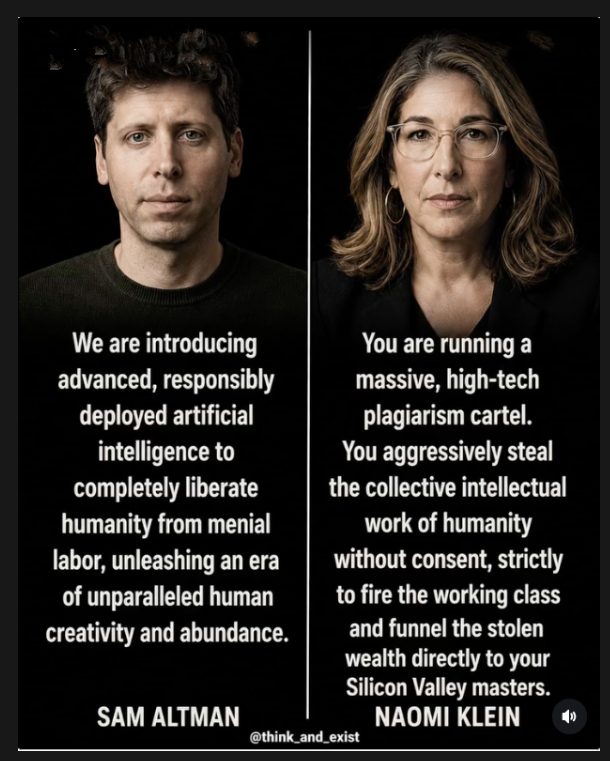
What #AI scraping has broken is not a legal equilibrium, but a fragile social one that the #dotcons had already been hollowing out for decades. They didn’t rely on “fair use” or reciprocity – they relied on enclosure, centralisation, and extraction, #AI simply accelerates that logic. So yes, “anything reachable by HTTP becomes fuel” is accurate – but the mistake is thinking the alternative is stronger copyright walls or more contractual gating, that deepens enclosure. The split you describe is real, but it’s not new, and it’s not caused by #AI, it’s the endpoint of a long enclosure of commons → platform capture (#dotcons), trust → contracts, sharing → surveillance + monetisation and public space → login walls.
The current AI mess is not the origin of this, it’s just a new layer of extraction sitting on top of the #mainstreaming mess. From an #OMN view, the interesting question isn’t how to reassert IP over scraping. It’s how to rebuild social and technical spaces where contribution, context, and reciprocity matter again – where value isn’t just extracted but circulated in ways communities can govern.
AI is not an existential threat to the #openweb, it’s an asshole amplifier inside an already broken system. The real loss we need to compost isn’t only copyright protection, it’s the erosion of the social commons that made openness meaningful in the first place.