The Sequence Opinion #852: The Bitter Lessons for Agentic Interfaces: A CLI for EVERYTHING
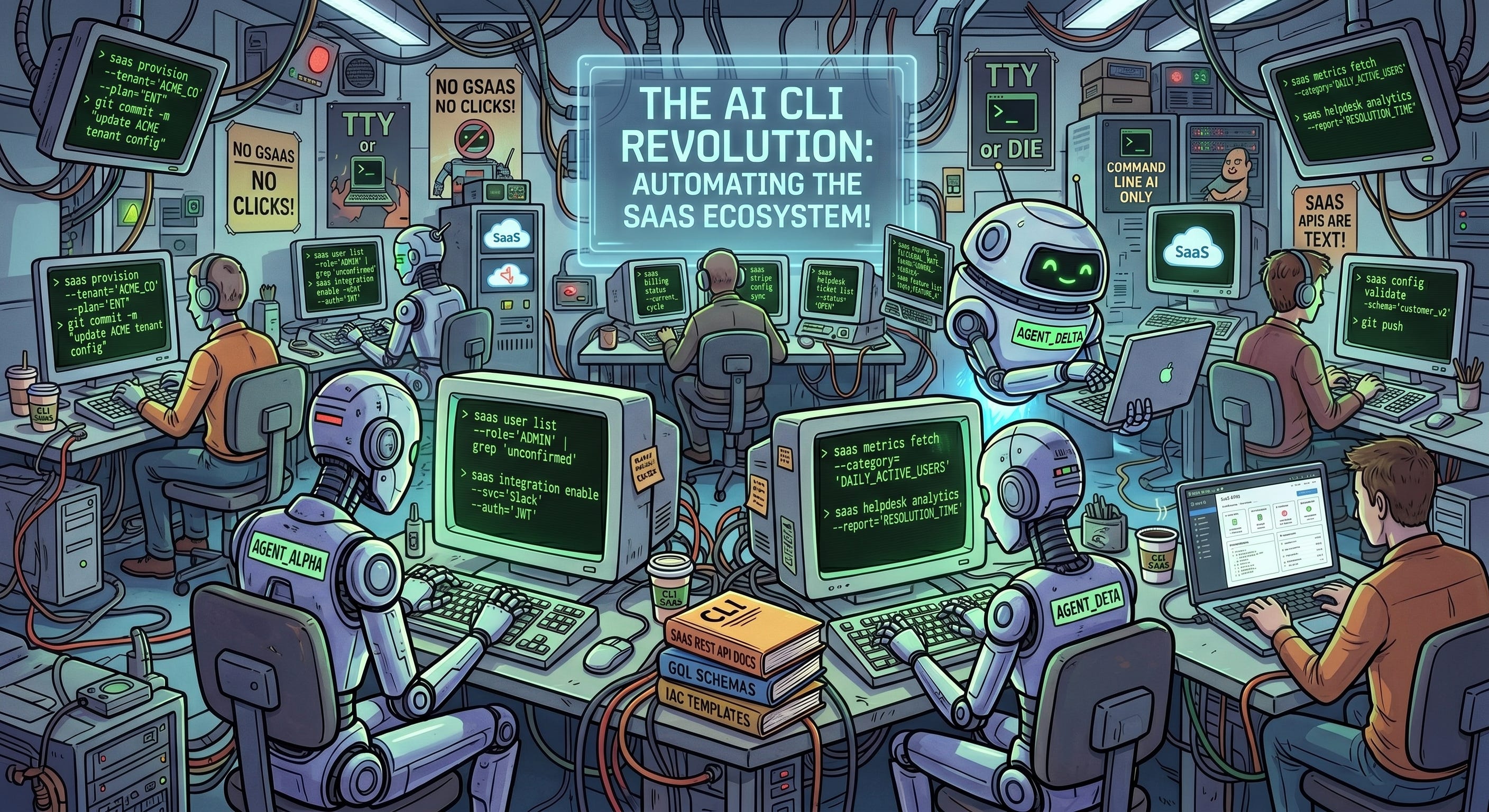
The next evolution of agentic SaaS isn’t more tool infrastructure. It’s a terminal.
I’ve been thinking a lot lately about why building agentic systems still feels so weirdly clunky, and I think I’ve finally put my finger on it.
Here’s the pattern that keeps repeating. You have an LLM. The LLM is, by any reasonable measure, the most capable text-processing machine ever built. It has read, in some statistical sense, every man page that exists, every Stack Overflow answer about awk, every dotfile checked into GitHub, every grumpy 2009 blog post about why your sed substitution didn’t work. It can produce a find ... -exec incantation that would make a 1990s sysadmin weep with nostalgia. It is, in a very deep sense, fluent in shell.
And then we sit it down in front of our shiny new SaaS platform and say: okay, we’re going to teach you how to use our product. Here are forty-seven carefully scoped MCP tools we wrote for you. Here is a JSON schema for each one. Here is a 200-page integration guide. Please do not improvise.
This is, I think, exactly backwards.
The thesis I want to argue is simple: the next phase of agentic SaaS is not about chat interfaces, and it’s not about ever-more-elaborate tool infrastructures. It’s about giving the agent a complete CLI and getting out of the way. Every SaaS, eventually, will ship a parallel command-line surface — not as a developer convenience, but as the primary interface for its non-human users. Which, increasingly, is most of its users.